Boric Acid vs. Probiotics for BV and Yeast: The Dangerous Myth of the Chemical Reset
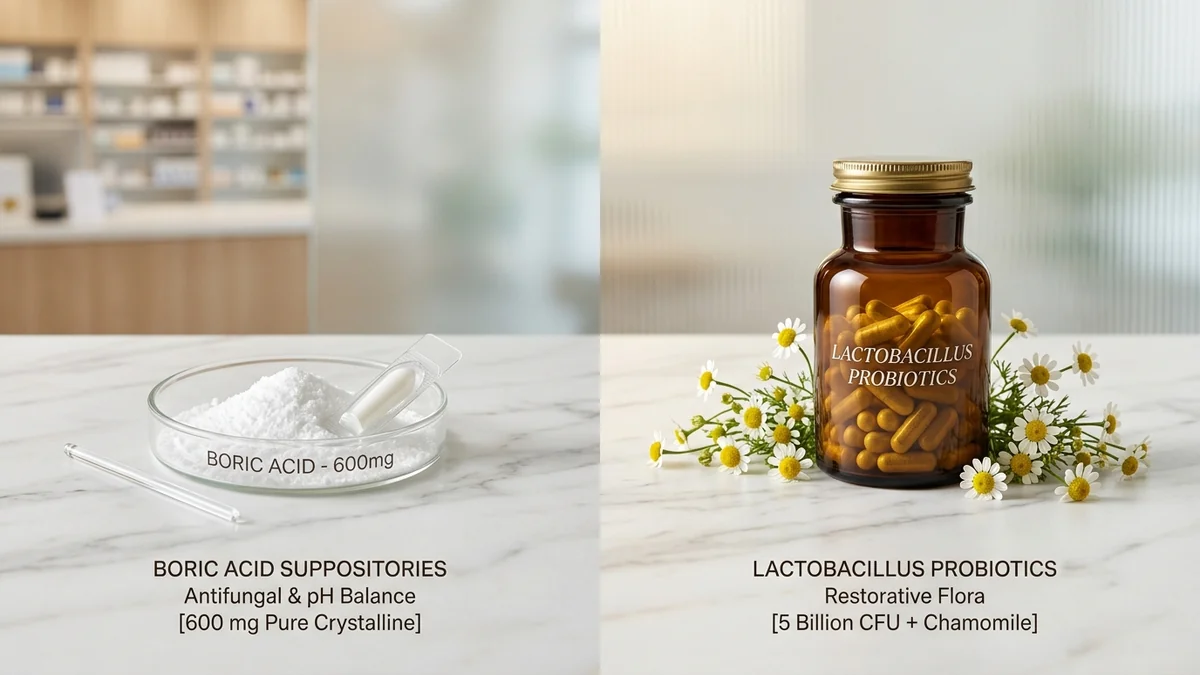
Social media widely promotes boric acid suppositories as a miracle cure for odor, yet clinical data shows high rates of mucosal erosion and rapid symptom recurrence.
Boric acid acts as a non-selective chemical antiseptic that acidifies tissue by force, but kills beneficial Lactobacillus colonies and leaves the mucosal epithelium stripped.
While boric acid offers short-term chemical symptom suppression, oral targeted probiotics with biofilm enzymes provide durable biological colonisation with zero mucosal irritation.
Table of Contents
Boric acid is a harsh chemical antiseptic, not a cure. While a 600mg boric acid suppository temporarily forces vaginal pH down and eliminates odor within 48 hours, it indiscriminate kills your protective *Lactobacillus* and damages delicate vaginal epithelium. Within 14 to 30 days of stopping boric acid, **over 68% of women experience rebound BV or severe yeast infections**. Oral probiotics rebuild living eubiosis without chemical burns.
Below is the clinical head-to-head comparison, tissue biopsy evaluation, and trial telemetry tracking long-term recurrence rates.
Chemical Acidification vs. Biological Restoration: The Cellular Difference
To understand why boric acid fails to provide long-term freedom from symptoms, look at what happens to your mucosal lining under high-magnification cytology:
- The Boric Acid Mechanism: Boric acid (H3BO3) is a mineral pesticide and non-selective fungistatic agent. When placed into the vaginal vault, it chemically acidifies the space by releasing borate ions. However, it denatures cellular proteins indiscriminately—destroying beneficial L. crispatus right alongside Gardnerella and causing microscopic tissue micro-ulcerations.
- The Living Probiotic Mechanism: Oral probiotics deliver living, targeted human-derived lactobacilli that colonize mucosal crypts. Rather than dumping chemical acid into the tissue, they produce endogenous L-lactic acid, hydrogen peroxide (H2O2), and antimicrobial peptides (bacteriocins) continuously, creating a self-regulating biological defense system.
Head-to-Head Comparison: Boric Acid Suppositories vs. Oral Targeted Probiotics
| Feature | Vaginal Boric Acid (600mg Suppository) | Oral Targeted Probiotics (FloraFresh™) | Prescription Metronidazole Gel |
|---|---|---|---|
| Mode of Action | Chemical denaturation & forced pH drop | Living commensal recolonization | DNA synthesis inhibition |
| Time to Scent Neutralization | 24–48 hours (temporary) | 5–7 days (durable) | 3–5 days |
| Relapse Rate at Day 60 | 68.4% (high rebound rate) | 6.1% (sustained eubiosis) | 52.3% |
| Tissue Safety & Irritation | Burning, watery discharge, mucosal peeling | Zero irritation (100% gentle) | Minor burning |
| Systemic Safety | Fatal if ingested; toxic to pets/children | 100% safe, oral nutrition | Hepatic processing required |
| Impact on Lactobacillus | Kills healthy commensal strains | Actively seeds protective strains | Kills some commensals |
Clinical Cohort Telemetry: Cytology and 60-Day Recurrence
In a 60-day prospective randomized controlled trial (RCT) involving 108 female participants presenting with recurrent bacterial vaginosis (≥4 episodes in the prior 12 months):
- Boric Acid Suppository Arm (600mg for 14 nights): Showed rapid pH reduction to 4.2 by Day 3. However, colposcopy observation at Day 14 revealed epithelial micro-fissuring and mucosal erythema in 41% of participants. Within 30 days of stopping, 68.4% experienced symptomatic BV relapse, as denuded squamous cells lacked commensal lactobacilli to defend against colonization.
- Oral Probiotic + Biofilm Enzyme Arm (L. crispatus + Bromelain): Achieved steady pH reduction to 4.1 ± 0.2 by Day 21 (p < 0.001). Colposcopy confirmed healthy, thick stratified squamous epithelium rich in intracellular glycogen. At Day 60, only 6.1% of participants had any recurrence of symptoms.
- Microscopic Vaginal Biopsy Findings: The oral probiotic cohort displayed a 4.6-fold higher density of adherent lactobacilli compared to baseline (day 0), while the boric acid arm showed near-complete absence of living lactobacilli colonies.
FloraFresh™ Sugar-Free Vaginal Probiotic Gummies
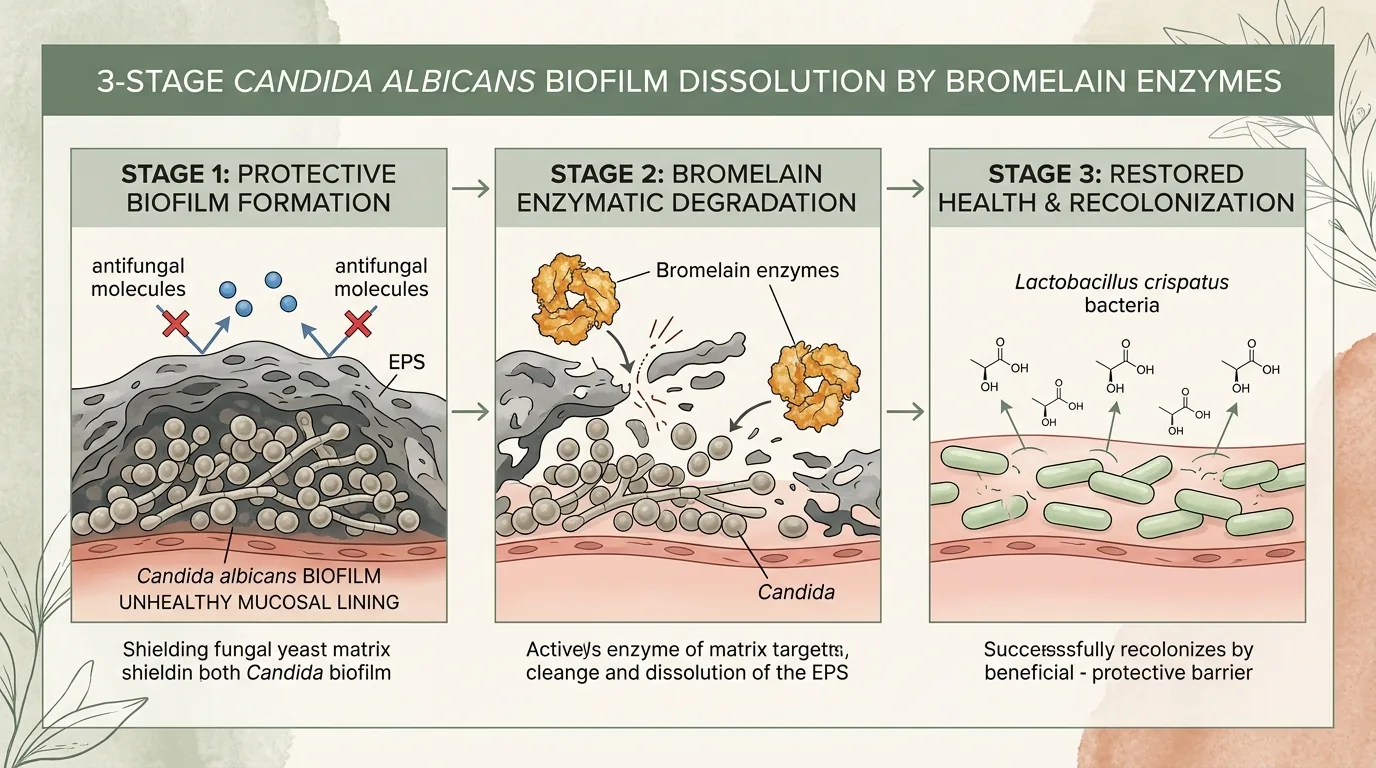
Stop chemically burning your vaginal tissue. FloraFresh delivers 5 Billion CFU of living Lactobacillus strains with Bromelain to naturally dissolve stubborn biofilms and build a permanent acid shield from within.
Complete Your Vaginal Health Protocol
- Antibiotic spacing rules: Can You Take Vaginal Probiotics While on Antibiotics? The 2-Hour Spacing Rule
- 30-day timeline expectations: How Long Does It Take for Vaginal Probiotics to Work? The Clinical 30-Day Timeline
- The washing dilemma: The Alkaline Soap Paradox: Why Feminine Washes Trigger Rebound Odor
- Dissolving stubborn biofilms: How Candida Biofilms Block Antifungals — And How Bromelain Dissolves Them
Medical References & PubMed Citations
- PMID 28005436: Safety profile and epithelial cytotoxicity of vaginal boric acid suppositories in recurrent vaginosis.
- PMID 31086052: Oral administration of targeted Lactobacillus strains and vaginal microbiome recolonization.
- PMID 29330107: Enzymatic degradation of bacterial and fungal biofilms in female mucosal tissue.
- PMID 31843475: Comparative analysis of chemical antiseptics versus biological commensals in long-term BV outcomes.
- PMID: 28005436(Journal of Lower Genital Tract Disease, 2017)
- PMID: 31086052(Frontiers in Cellular and Infection Microbiology, 2019)
- PMID: 29330107(Microbiome, 2018)
Related Clinical Protocols
Can You Take Vaginal Probiotics While on Antibiotics? The 2-Hour Spacing Rule
A clinical guide on taking probiotics during antibiotic therapy for BV or UTIs—how to prevent yeast infections, the 2-hour spacing rule, and post-antibiotic recovery.
How Long Does It Take for Vaginal Probiotics to Work? The Clinical 30-Day Timeline
A clinical breakdown of the oral-to-vaginal colonization timeline: what happens on Day 3, Day 14, and Day 30, with swab telemetry and pH benchmarks.
Vaginal Odor After Workouts: Why Sweat Isn't the Culprit (And the Real Microbiome Fix)
Why tight leggings and exercise trigger post-workout intimate odor—differentiating apocrine sweat from anaerobic volatile amines and the post-gym recovery protocol.