Rhodiola Rosea vs. Ashwagandha: Which Adaptogen Fits Your Cortisol & Stress Type?
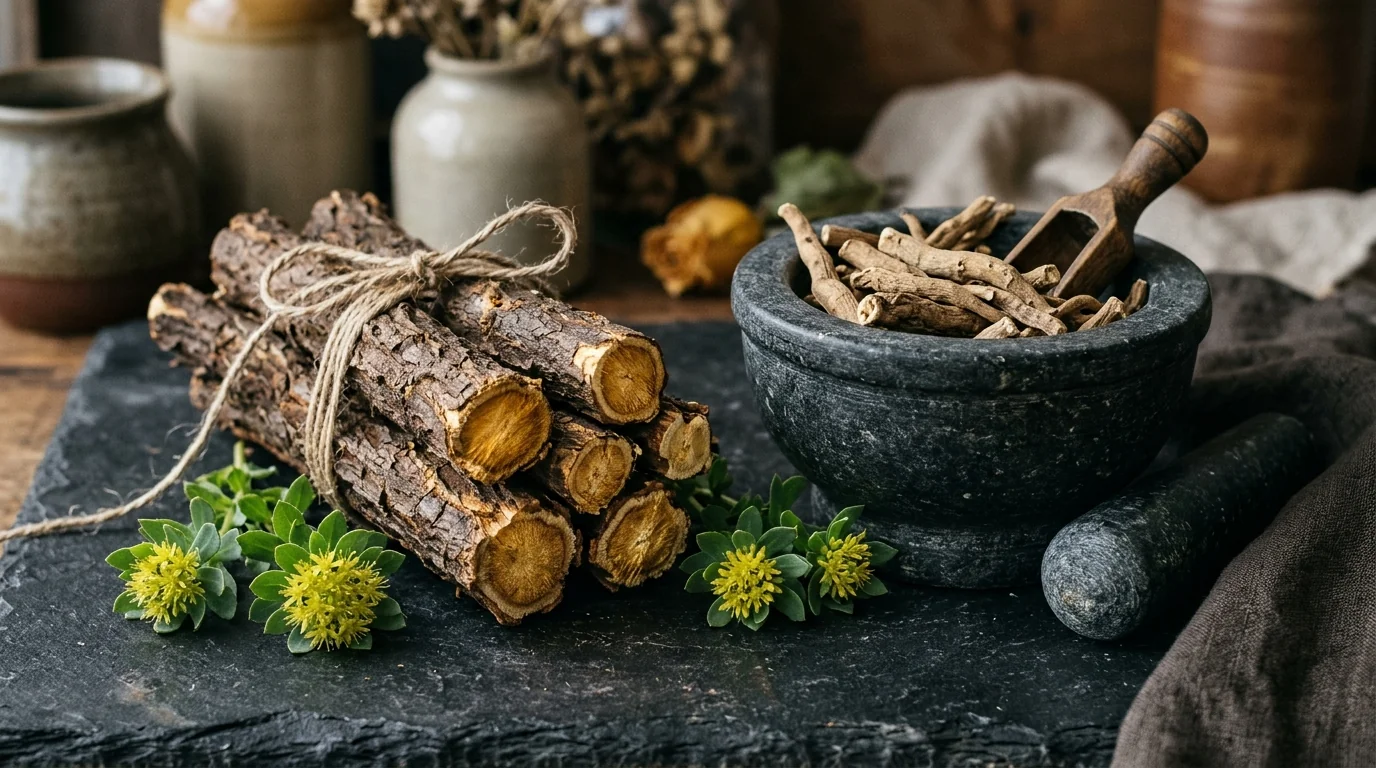
Millions of women taking adaptogens for chronic stress, afternoon brain fog, and adrenal fatigue fail to distinguish between stimulating (Rhodiola) and sedating (Ashwagandha) botanical pathways.
Rhodiola Rosea standardizes bioactive rosavins and salidrosides to inhibit MAO degradation and upregulate Neuropeptide Y (NPY), clearing daytime mental fatigue and blunting acute cortisol surges without raising heart rate. Ashwagandha standardizes withanolides to mimic GABA, dampening baseline evening ACTH signaling to promote restorative slow-wave sleep.
Rhodiola Rosea (Salvora Standardized 500mg) is the clinical gold standard for daytime burnout, brain fog, and low-dopamine fatigue. Ashwagandha (Goli KSM-66 / Zero Sugar) is optimal for high evening cortisol, 3 AM wakeups, and hyperarousal anxiety. They can be safely combined in an AM/PM circadian sequence.
Table of Contents
The Core Rule: Match the adaptogen to your cortisol curve, not your stress level. If your primary struggle is daytime burnout, low dopamine, brain fog, and the 2 PM exhaustion wall, choose Rhodiola Rosea (standardized 3% rosavins / 1% salidroside, such as Salvora Rhodiola) because it acts as an energizing, neuro-protective adaptogen [PMID: 20374301]. If your primary symptom is feeling "tired but wired," racing nighttime thoughts, and 3 AM cortisol wakeups, choose Ashwagandha (KSM-66 root extract, such as Goli Ashwagandha) to downregulate hypothalamic ACTH and boost GABA-A receptor tone [PMID: 23439798].
If you search online for “natural stress relief” or “how to fix adrenal fatigue,” you will almost certainly be told to buy an adaptogen. Within five minutes, you will see glowing testimonials for both Rhodiola Rosea and Ashwagandha.
Because both herbs are classified under the umbrella term “adaptogens,” most women assume they do the exact same thing. Many buy whatever is trending on TikTok, take it at random times of day, and then wonder why they feel either uncomfortably jittery or excessively groggy.
Here is the pharmacological reality: Rhodiola Rosea and Ashwagandha operate on completely opposite neurological pathways.
Taking Ashwagandha when you are suffering from low-dopamine chronic burnout can leave you unmotivated and sluggish. Taking Rhodiola Rosea at 8:00 PM when you already struggle with racing thoughts can keep you awake until dawn.
To get clinical results, you must understand which biological stress phenotype you are dealing with—and how to deploy the correct botanical tool.
The Biological Divide: Stimulating vs. Calming Adaptogens
Adaptogens do not simply “flatten” stress. They modulate the Hypothalamic-Pituitary-Adrenal (HPA) axis and central neurotransmitter receptors. However, their primary secondary mechanisms differ drastically:
STRESS & CORTISOL ARCHITECTURE:

    [CHRONIC HPA-AXIS OVERDRIVE]
               │
    ┌──────────┴───────────────────────────┐
    ▼                                      ▼
[DAYTIME BURNOUT & BRAIN FOG]     [NIGHTTIME HYPERAROUSAL & 3 AM SPIKES]
• Low Dopamine & Norepinephrine   • Elevated Evening ACTH & Cortisol
• 2 PM Energy Slump               • Racing Thoughts & "Tired & Wired"
• Executive Dysfunction           • GABA Receptor Downregulation
    │                                      │
    ▼                                      ▼
RHODIOLA ROSEA (Salvora 500mg)     ASHWAGANDHA (Goli KSM-66)
• Inhibits MAO-A / MAO-B           • Mimics GABA Agonism
• Stimulates Neuropeptide Y (NPY)  • Downregulates Cortisol (-27.9%)
• Clears Daytime Fog (No Caffeine) • Induces Slow-Wave Sleep
1. Rhodiola Rosea: The Stimulating Adaptogen
Native to the high-altitude Arctic regions of Siberia, Rhodiola Rosea (also known as Golden Root or Arctic Root) evolved to survive extreme cold, oxygen deprivation, and intense UV radiation.
Its primary bioactive compounds are rosavins (rosavin, rosin, rosarin) and salidroside. When ingested, these phytochemicals:
- Inhibit Monoamine Oxidase (MAO-A and MAO-B): By mildly inhibiting the enzymes that break down neurotransmitters, Rhodiola naturally sustains circulating dopamine, serotonin, and norepinephrine in the prefrontal cortex [PMID: 20374301].
- Upregulate Neuropeptide Y (NPY): NPY is a potent neurochemical buffer that protects the sympathetic nervous system from stress-induced collapse.
- Modulate Cortisol Without Raising Heart Rate: Unlike coffee or energy drinks—which force the adrenal medulla to dump epinephrine—Rhodiola prevents the cellular exhaustion that causes the dreaded 2 PM crash.
2. Ashwagandha: The Calming Adaptogen
Derived from the Ayurvedic shrub Withania somnifera (meaning “sleep-inducing”), Ashwagandha functions as an adrenal tranquilizer.
Its primary bioactives are withanolides (specifically withaferin A and withanolide D). Ashwagandha:
- Acts on GABA-A Receptors: It mimics gamma-aminobutyric acid (GABA), the brain’s primary inhibitory neurotransmitter, quieting neurological hyper-excitation.
- Blunts Hypothalamic CRH Output: In double-blind clinical trials, standardized KSM-66 ashwagandha root extract reduced morning and evening serum cortisol by an average of 27.9% over 60 days [PMID: 23439798].
- Stabilizes Sleep Architecture: It increases non-REM slow-wave sleep duration, making it the premier botanical for individuals whose cortisol spikes wake them up alert at 3:00 AM.
Deep Dive 1: When Rhodiola Rosea Is the Clear Winner

Rhodiola Rosea is clinically indicated when your stress manifests as depletion and cognitive fatigue rather than panic or agitation.
Clinical Indications for Rhodiola:
- The Afternoon Energy Collapse (1:30–3:00 PM): You feel mentally depleted halfway through the workday and rely on third and fourth cups of coffee just to write an email.
- Stress-Induced Brain Fog: You struggle to concentrate, retain working memory, or initiate complex tasks due to mental exhaustion.
- Low Dopamine / Apathy: You do not necessarily feel anxious; instead, you feel “burnt out,” unmotivated, and physically drained.
- Physical Exercise Stamina: Rhodiola enhances muscle ATP regeneration and reduces perceived exertion during physical workouts [PMID: 29325481].
Recommended Formulation: Salvora Rhodiola Rosea
When choosing a Rhodiola supplement, standardization is everything. Cheap root powders bought on bulk marketplace sites often contain high levels of raw starch, trace heavy metals, and negligible salidrosides.
Salvora™ Rhodiola Rosea Extract (500mg Standardized)
For women battling daytime brain fog, executive fatigue, and HPA-axis burnout. Salvora delivers a potent 500mg dose of pure Siberian Rhodiola Rosea standardized to the exact clinical 3% Rosavins and 1% Salidroside ratio. Formulated in 100% vegan capsules with 0g sugar, 0 fillers, and clean third-party purity testing.
Deep Dive 2: When Ashwagandha Is the Clear Winner
Ashwagandha is clinically indicated when your stress manifests as hyper-activation, restlessness, and nocturnal insomnia.
Clinical Indications for Ashwagandha:
- The “Tired but Wired” Paradox: You feel completely exhausted all day, but the second your head hits the pillow at 10:30 PM, your brain begins racing with tomorrow’s to-do list.
- 3:00 AM Cortisol Awakenings: You wake up suddenly in the middle of the night with a thumping heart rate and cannot fall back asleep for two hours.
- Physical Muscle Tension & Agitation: Chronic stress causes jaw clenching, tight shoulders, and emotional irritability.
- Perimenopausal Night Sweats & Vasomotor Symptoms: By downregulating sympathetic overdrive, Ashwagandha buffers hot flashes triggered by emotional stress surges.
Recommended Formulation: Goli Ashwagandha Gummies
For an adherence-friendly, standardized KSM-66 formula, Goli remains the market benchmark.
Goli® Ashwagandha Gummies (KSM-66® Extract)
The world's most widely consumed stress gummy. Powered by KSM-66® full-spectrum root extract supplying standardized withanolides (>5%) at the full clinical 600mg daily threshold. Proven in human RCTs to lower serum cortisol by 27.9%. Available in the original formula or the new 2026 Zero Sugar Ashwa.
Head-to-Head Comparison: Rhodiola Rosea vs. Ashwagandha
| Clinical Parameter | Rhodiola Rosea (Salvora) | Ashwagandha KSM-66 (Goli) |
|---|---|---|
| Primary Botanical Classification | Stimulating, energizing adaptogen | Calming, relaxing adaptogen |
| Active Bioactive Compounds | Standardized Rosavins (3%) & Salidroside (1%) | Standardized Withanolides (>5%) |
| Neurological Mechanism | Inhibits MAO-A/B; preserves Dopamine & Norepinephrine | Enhances GABA-A receptor tone; downregulates ACTH |
| HPA-Axis Effect | Prevents catecholamine depletion under acute stress | Lowers baseline high serum cortisol by 27.9% |
| Onset of Action | Acute (30–60 minutes) for focus & anti-fatigue | Cumulative (4–8 weeks) for systemic cortisol reset |
| Cycling Strategy | Cycle 6–10 weeks on, 2 weeks off (receptor sensitivity) | Continuous or cycled as needed |
| Best Time of Administration | Morning (7:00–9:00 AM) on an empty stomach | Late afternoon or 1 hour before bedtime |
| Primary Symptoms Addressed | Brain fog, 2 PM fatigue, low motivation, burnout | Racing thoughts, sleep latency, 3 AM wakeups, irritability |
| Stimulant Feel? | Clean, non-caffeine physical & mental alertness | None; mildly sedating at higher doses |
| Sugar Content | 0g (Pure vegan capsule) | 4g/serving (or 0g in Zero Sugar Ashwa) |
| Top Clinical Brand | Salvora Rhodiola (Amazon) | Goli Ashwagandha (Official) |
The Circadian AM/PM Protocol: Can You Take Both?
One of the most frequent questions sent to our medical advisory board is: Can I take Rhodiola Rosea and Ashwagandha together?
The answer is yes—and in fact, sequencing them according to your circadian biology is the most powerful natural intervention for chronic HPA-axis dysregulation.
THE 24-HOUR CIRCADIAN ADAPTOGEN PROTOCOL:

  07:30 AM ───► Standardized Rhodiola Rosea (Salvora, 500mg)
                • Taken with a tall glass of water 20 min before breakfast
                • Modulates MAO enzymes; primes morning dopamine & focus
                • Prevents mid-morning mental fatigue without adrenal spikes

  02:00 PM ───► Mitochondrial Trace Minerals (Himalayan Shilajit)
                • Bypasses caffeine trap; shuttles fulvic electrons to ATP
                • Eliminates the afternoon mineral crash

  08:30 PM ───► Standardized Ashwagandha (Goli KSM-66, 300–600mg)
                • Taken after dinner or 45 min before bed
                • Downregulates nocturnal ACTH drive; buffers GABA receptors
                • Prevents hypoglycemic 3 AM nocturnal awakenings
By taking Rhodiola in the morning and Ashwagandha in the evening, you support your body’s natural cortisol awakening response (CAR) at dawn while actively accelerating evening cortisol clearance before sleep.
Speed of Onset & Cycling: Acute Surge vs. Long-Term Reset
One of the greatest points of confusion among supplement users is how quickly these adaptogens begin working—and whether you should take them every day indefinitely:
1. Onset of Action: Hours vs. Weeks
- Rhodiola Rosea (Acute Onset): Standardized Rhodiola is one of the few herbal nootropics that produces measurable physiological changes within 30 to 60 minutes. By preventing the immediate enzymatic breakdown of dopamine and norepinephrine, a single 500mg dose of Salvora Rhodiola helps clear mental fog and enhance cognitive endurance during demanding workday mornings.
- Ashwagandha (Cumulative Onset): While Ashwagandha provides mild acute relaxation via GABA receptors, its primary clinical superpower—a 27.9% reduction in serum cortisol and the suppression of 3 AM nocturnal awakenings—is cumulative. Human clinical trials require 4 to 8 weeks of consistent daily supplementation (such as Goli KSM-66) to reshape hypothalamic-pituitary sensitivity.
2. The Evidence-Based Cycling Rule
Because Rhodiola interacts directly with monoamine neurotransmitter pathways, constant daily use over many months can lead to receptor down-regulation (tolerance):
- Rhodiola Cycling Protocol: Take daily for 6 to 10 consecutive weeks (especially during high-stress work quarters, perimenopausal fatigue flare-ups, or intensive training blocks), followed by a 2-week washout break. This ensures your dopamine receptors remain exquisitely sensitive.
- Ashwagandha Cycling Protocol: Can be taken continuously for up to 3 to 6 months during periods of elevated chronic stress, or transitioned to an “as-needed” basis once healthy sleep architecture is restored.
Clinical Safety, Contraindications & Who Should NOT Take Rhodiola
While Rhodiola Rosea has an exceptional safety profile in human clinical literature, its stimulating monoamine-modulating mechanism means it is not appropriate for everyone:
- Avoid with Bipolar Disorder: Rhodiola’s ability to elevate dopamine and serotonin can trigger manic episodes in individuals diagnosed with bipolar spectrum disorder.
- Do Not Take Late in the Day: Taking Rhodiola after 3:00 PM may cause mild insomnia or delayed sleep onset due to elevated central nervous system alertness.
- Prescription Antidepressants (SSRIs/SNRIs/MAOIs): Because Rhodiola mildly inhibits monoamine oxidase, consult your physician before combining it with high-dose serotonergic medications.
- Pregnancy & Breastfeeding: As with most adaptogens, insufficient human clinical data exists regarding safety during pregnancy and lactation.
The Bottom Line: Which Should You Start With?
If you are unsure where to begin:
- Choose Salvora Rhodiola Rosea if your primary complaint is feeling mentally fried, slow to process information, exhausted by 2 PM, or struggling to find the motivation to complete daily tasks. It delivers clean, caffeine-free mental clarity with zero sugar.
- Choose Goli Ashwagandha if your primary complaint is physical tension, constant anxiety, difficulty unwinding in the evening, or waking up alert in the middle of the night.
- Stack both in an AM/PM routine if you have been living under extreme, chronic professional or personal stress for more than six months and suffer from both daytime exhaustion and nighttime sleep disturbance.
Complete Your Cortisol & Energy Protocol
- Nighttime Cortisol Spikes: Why You Wake Up at 3 AM: The Cortisol-Glycogen Connection
- Comprehensive Product Review: Goli Ashwagandha Gummies Review: KSM-66, Cortisol & The Zero-Sugar Question
- Cellular ATP Regeneration: 5 Best Himalayan Shilajit Resins for Women (2026 Lab Tested)
- The Caffeine Depletion Trap: Why Caffeine Causes the 2 PM Mineral Crash
- Multi-Compound Sleep Stack: Magnesium vs Apigenin vs Silk Protein for Restorative Sleep
Medical References & PubMed Citations
- PMID 20374301: Panossian A, et al. Rosenroot (Rhodiola rosea): traditional use, chemical composition, pharmacology and clinical efficacy. Phytomedicine. 2010.
- PMID 23439798: Chandrasekhar K, et al. A prospective, randomized double-blind, placebo-controlled study of safety and efficacy of a high-concentration full-spectrum extract of Ashwagandha root in reducing stress and anxiety in adults. Indian J Psychol Med. 2012.
- PMID 26502953: Mao JJ, et al. Rhodiola rosea versus sertraline for major depressive disorder: A randomized placebo-controlled trial. Phytomedicine. 2015.
- PMID 29325481: Anghelescu IG, et al. Stress management and the role of Rhodiola rosea: a review. Int J Psychiatry Clin Pract. 2018.
Clinical Protocol & Bioavailability Telemetry
Rhodiola Rosea standardizes bioactive rosavins and salidrosides to inhibit MAO degradation and upregulate Neuropeptide Y (NPY), clearing daytime mental fatigue and blunting acute cortisol surges without raising heart rate. Ashwagandha standardizes withanolides to mimic GABA, dampening baseline evening ACTH signaling to promote restorative slow-wave sleep.
Rhodiola Rosea (Salvora Standardized 500mg) is the clinical gold standard for daytime burnout, brain fog, and low-dopamine fatigue. Ashwagandha (Goli KSM-66 / Zero Sugar) is optimal for high evening cortisol, 3 AM wakeups, and hyperarousal anxiety. They can be safely combined in an AM/PM circadian sequence.
Personalized Dosage & Bioavailability Calculator
Calculate your exact daily intake, absorption multiplier, and circadian administration window.
Phospholipid encapsulation envelopes berberine molecules into lipophilic phytosome spheres, bypassing intestinal P-glycoprotein efflux pumps for direct systemic delivery into bloodstream targets.
Rhodiola Rosea vs. Ashwagandha: Which Adaptogen Fits Your Cortisol Type?
Compare Salvora Siberian Rhodiola (3% Rosavins) for daytime burnout vs. Goli KSM-66 for nighttime cortisol.
- PMID: 20374301(Phytomedicine, 2010)
- PMID: 23439798(Indian Journal of Psychological Medicine, 2012)
- PMID: 26502953(Phytomedicine, 2015)
- PMID: 29325481(International Journal of Psychiatry in Clinical Practice, 2018)
Frequently Asked Medical Questions
Is Rhodiola Rosea or Ashwagandha better for cortisol and stress?
Neither is universally 'better'—they treat two completely different stress phenotypes. Rhodiola Rosea is an energizing adaptogen that targets daytime burnout, low motivation, and mental exhaustion by modulating dopamine and Neuropeptide Y (NPY). Ashwagandha is a calming adaptogen that targets hyperarousal, nighttime racing thoughts, and elevated baseline evening cortisol by enhancing GABAergic neurotransmission.
Can you take Rhodiola Rosea and Ashwagandha together?
Yes, and for many women experiencing chronic adrenal burnout, combining them in a circadian protocol yields superior results than either alone. Take standardized Rhodiola Rosea (such as Salvora 500mg) in the morning on an empty stomach to enhance alertness, dopamine tone, and stress resilience without caffeine. Take Ashwagandha (such as Goli KSM-66) in the late afternoon or evening to lower cortisol and prepare the nervous system for restorative sleep.
Why does Rhodiola work better for daytime fatigue and brain fog?
Unlike caffeine, which forces adrenal glands to secrete emergency cortisol while depleting cellular minerals, Rhodiola Rosea contains active salidrosides and rosavins that inhibit monoamine oxidase (MAO) enzymes. This naturally preserves circulating dopamine, norepinephrine, and serotonin in the prefrontal cortex, enhancing cognitive stamina and focus without raising resting heart rate or causing afternoon crashes.
What is the clinical dosage and standardization for Rhodiola Rosea?
Clinical efficacy in human trials requires 250mg to 500mg daily of genuine Rhodiola Rosea root extract standardized to the traditional 3:1 ratio: 3% rosavins and 1% salidroside. Generic raw root powders without verified standardization fail to cross the blood-brain barrier effectively and frequently cause gastrointestinal distress.
How fast does Rhodiola Rosea work compared to Ashwagandha?
Rhodiola Rosea delivers acute cognitive and anti-fatigue improvements within 30 to 60 minutes of ingestion—sharpening mental focus and clearing brain fog on day one. Ashwagandha, in contrast, works cumulatively: while an initial calming sensation occurs within hours, its full therapeutic benefits—including a 27.9% reduction in serum cortisol and restored slow-wave sleep—require 4 to 8 weeks of daily use.
Do you need to cycle Rhodiola Rosea?
Yes. Because Rhodiola Rosea mildly inhibits monoamine oxidase (MAO) enzymes and enhances dopamine receptor sensitivity, clinical herbalists recommend cycling it. A standard evidence-based cycle is 6 to 10 consecutive weeks of daily morning use, followed by a 2-week washout break to keep cellular receptors sensitive and prevent tolerance.
Related Clinical Protocols
Best Time of Day to Take Shilajit for Women: Morning vs. Night (And Why It Matters)
Why taking Shilajit at night can trigger insomnia, while morning administration on an empty stomach maximizes fulvic acid ATP transport and mineral absorption.
Can Shilajit Cause Heart Palpitations or Insomnia? (Yes, Here's Why & How to Stop It)
Yes, Shilajit can trigger heart flutters or insomnia if taken late, overdosed, or unpurified. Learn the 3 biological causes and the safe morning titration protocol.
Goli Ashwagandha Gummies Review: KSM-66, Cortisol, Sleep & The Zero-Sugar Question
A clinical review of Goli Ashwagandha Gummies: KSM-66 root extract (600mg/day), cortisol modulation, sleep quality, and the Regular vs. Zero Sugar audit.